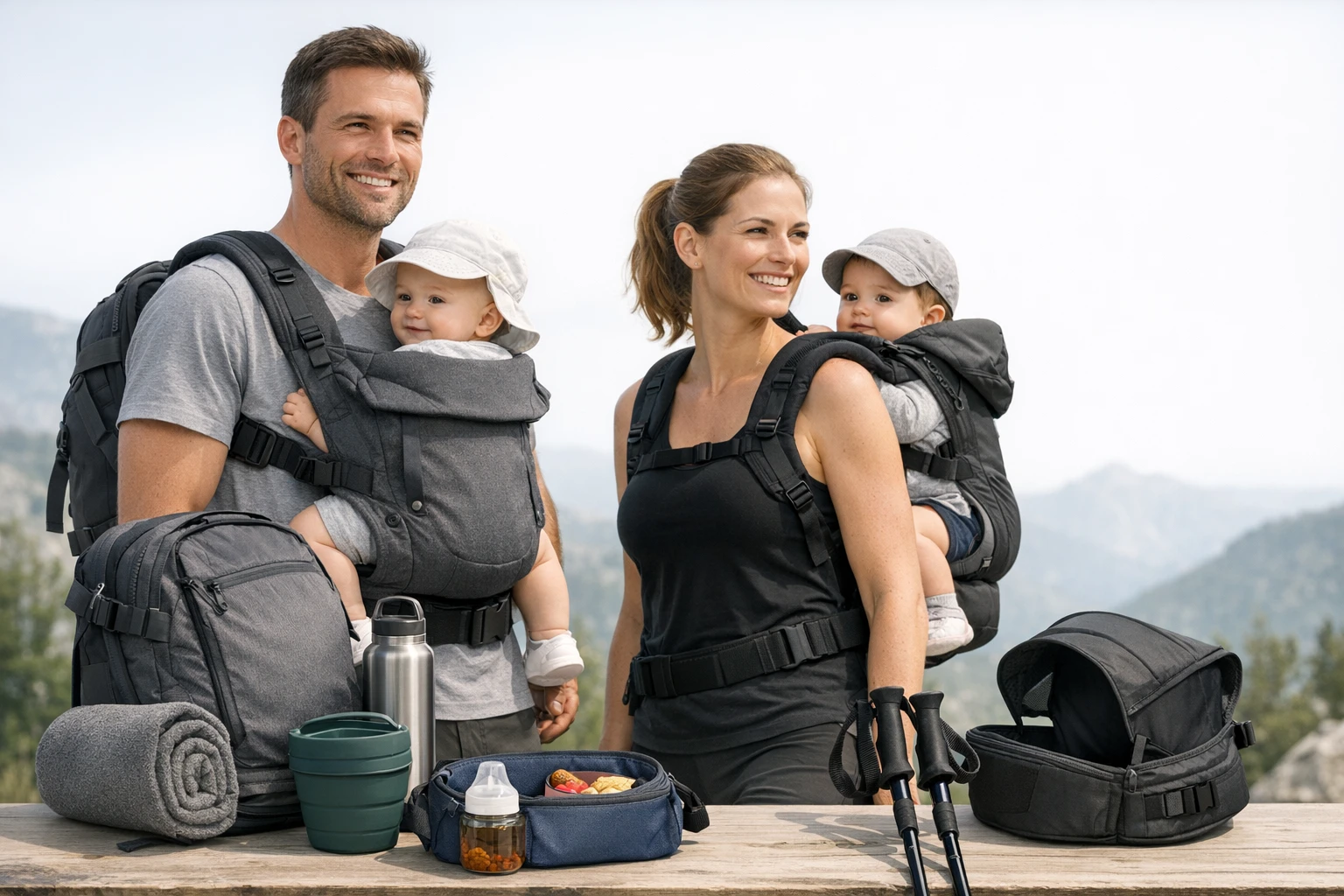
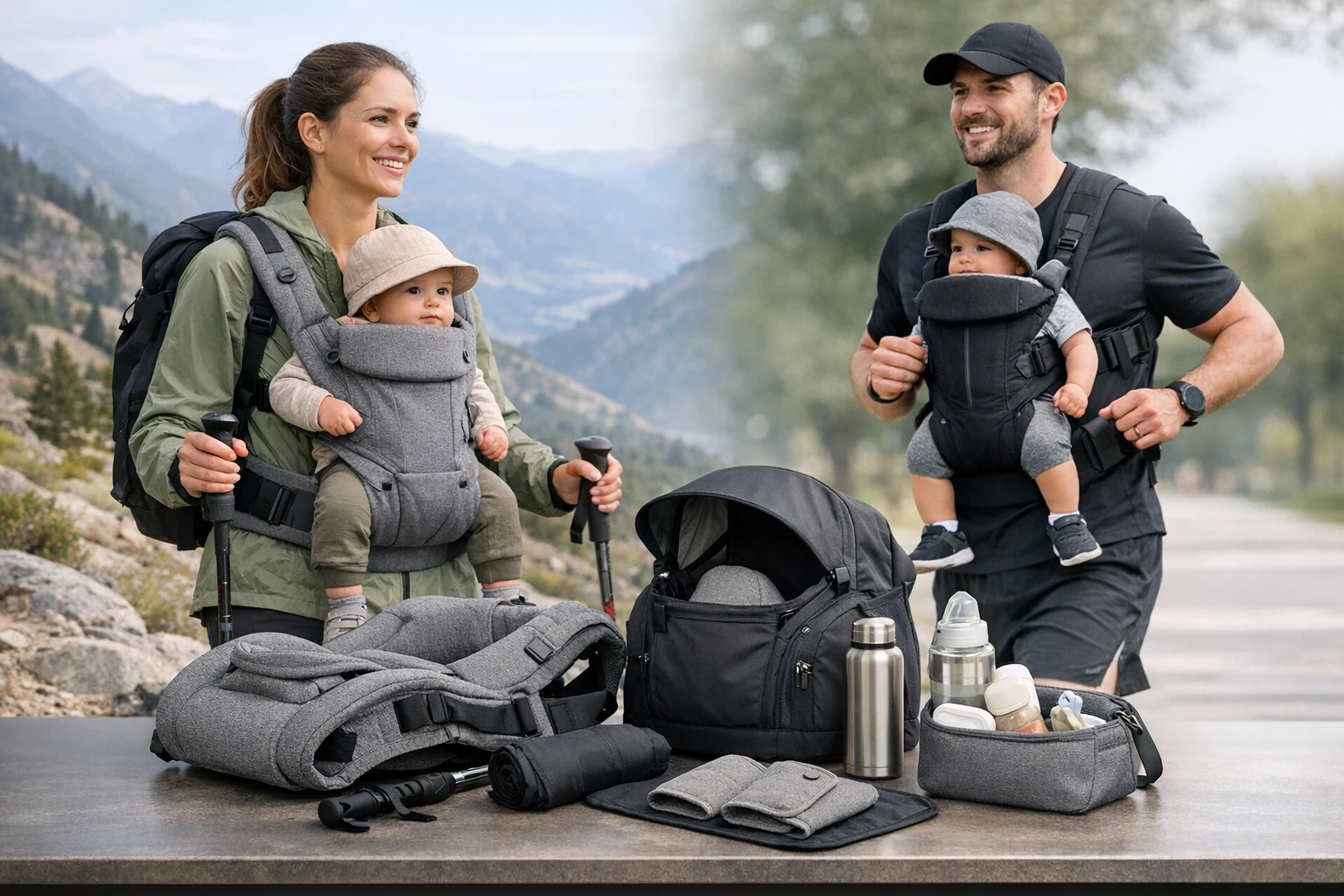
15 Best Ergonomic Baby Carriers & Must-Have Accessories for Active Parents (Hiking, Running & Travel)
Published: February 1, 2026
Introduction
Active parents require gear that balances comfort, safety and mobility. This listicle highlights 15 top ergonomic baby carriers and essential accessories for active parents, with specific guidance for hiking, running and travel.
Each carrier is evaluated for ergonomic support, adjustability, packability and suitability for different activities. The article provides pros and cons, fitting instructions, case examples and accessory pairings that improve real-world performance.
How to choose an ergonomic carrier for active lifestyles
Ergonomic baby carriers support the infant's hips in a natural M-shape and distribute weight across the parent’s hips and shoulders. For hiking and running, features such as a structured hip belt, ventilated fabric and a secure hood are beneficial.
Active parents should prioritize adjustable fit for different body shapes and growth stages, secure buckles and compliance with safety standards. Consider the intended use, the child’s age and the frequency of extended wear when selecting a model.
Top 15 Ergonomic Baby Carriers
1. AdventurePro TrailFrame Carrier (Best for long hikes)
The AdventurePro TrailFrame has a lightweight aluminum frame, high-capacity hip belt and ventilated back panel. It supports infants with an optional newborn insert and transitions easily to toddler mode with extended seat width.
Pros: excellent weight distribution, storage pockets, integrated rainfly. Cons: higher price point and slightly bulkier for short urban trips. Real-world case: a couple completed a 12-mile day hike carrying a 20-pound toddler for four hours with minimal discomfort.
2. SprintRun Lite (Best for running)
The SprintRun Lite is designed for joggers with a secure harness system, low-swing carriage and shock-absorbing shoulder straps. It is certified for babywearing while running up to recommended speeds per manufacturer guidance.
Pros: aerodynamic fit, reflective accents, breathable mesh. Cons: less storage and limited newborn support without an insert. Usage tip: perform a short test run and adjust straps incrementally to prevent bouncing.
3. CommuterWrap Flex (Best for travel and public transit)
The CommuterWrap Flex is compact, folds flat into a travel bag and allows for quick chest-to-back transitions. The fabric is machine washable and dries rapidly during travel itineraries.
Pros: lightweight, easy airport security, discreet nursing access. Cons: less lumbar support for extended trekking. Travel case: a parent navigated three airports in one day while carrying a six-month-old without needing a stroller.
4. SummitCarrier Elite (Versatile for kids up to 45 lbs)
SummitCarrier Elite features an adjustable seat that grows with the child and a robust hip belt with load lifters. The carrier integrates a sunshade and insulated bottle pocket for long outings.
Pros: extended size range, durable materials, strong warranty. Cons: weight increases pack weight when not in use. Comparison: versus TrailFrame, SummitCarrier provides more on-body storage but less structure for heavy loads.
5. CityErgo SoftWrap (Everyday ergonomic comfort)
CityErgo SoftWrap prioritizes ergonomic positioning with a soft, cushioned waistband and wide seat. It is ideal for frequent short-duration errands and public settings.
Pros: soft fabric, easy adjustments, affordable. Cons: less suited to high-impact activities like running. Step-by-step: to fit, fasten waist at hip level then pull shoulder straps snug, ensuring the baby’s knees are higher than the bottom.
6. Voyager Convertible (Best modular option)
Voyager Convertible allows multiple carry positions: front inward, front outward, hip and back. It converts from a soft-structured carrier to a hiking-ready configuration with an optional frame.
Pros: flexibility, cost-effective modular upgrades. Cons: added complexity in assembly. Use-case: parents who travel and hike on alternate weekends benefit from its modularity.
7. AeroMesh Runner (High-ventilation running carrier)
AeroMesh Runner focuses on breathability with large mesh panels and moisture-wicking straps. It reduces heat build-up for both child and parent during high-intensity outdoor runs.
Pros: cool and comfortable, low bounce. Cons: mesh can wear faster and offers less sun protection. Training tip: practice increasing running duration in five-minute increments to assess comfort and baby tolerance.
8. MountainMule Expedition (Heavy-duty hiking and trekking)
MountainMule Expedition is built for multi-day trekking with a load-bearing frame, integrated hydration port and sleeping pad straps. It supports heavier toddlers and provides significant lumbar support for extended carrying.
Pros: excellent for long expeditions, high load capacity. Cons: best suited for committed hikers due to bulk. Case study: a family completed a two-day backcountry trip using a MountainMule with a 3-year-old, carrying extra gear without sacrificing comfort.
9. CompactCarry Pocket (Ultralight travel option)
CompactCarry Pocket folds into a small pouch and weighs under one pound. It offers basic ergonomic support for infants and toddlers for short durations during travel and city walks.
Pros: minimal bulk and travel-friendly. Cons: not for long hikes or heavy children. Ideal scenario: last-minute stroller-free transit through train stations and markets.
10. ErgoToddle HipSeat Pro (Best for hip carries and toddlers)
ErgoToddle HipSeat Pro features a structured seat that eases hip carries and provides quick on-off convenience. It reduces shoulder tension during short-term toddler carries.
Pros: fast transitions, supportive for toddlers. Cons: limited newborn compatibility. Practical tip: use the hip seat for brief rests during longer family walks while alternating with a full carrier.
11. UrbanNomad WrapCarrier (Stylish ergonomic wrap)
UrbanNomad WrapCarrier blends a sleek aesthetic with ergonomic shaping to support a natural seat. It is suitable for urban parents prioritizing style alongside function.
Pros: elegant appearance, close contact bonding. Cons: requires practice to achieve secure fit. Instruction: rehearse wrapping technique at home before using it outdoors to ensure safe positioning.
12. AllTerrain Modular Frame (Professional trekking frame)
AllTerrain Modular Frame attaches to compatible carriers to deliver robust load-bearing capacity and adjustable suspension. It is ideal for parents who require more structure for long treks and heavier loads.
Pros: professional-grade stability, customizable suspension. Cons: added complexity and increased weight. Comparison: a backpack-style frame differs from soft-structured carriers by moving load to hips more effectively for multi-hour carries.
13. BabyJog Elite Carrier (Running-focused with safety harness)
BabyJog Elite integrates a reinforced harness and minimal swing design to reduce motion transfer during runs. It also includes reflective trims for low-light safety.
Pros: focused safety features for runners, durable straps. Cons: limited carry positions. Practical advice: always follow the manufacturer’s age and weight limitations and do a pre-run safety check.
14. TravelLite Convertible Sling (Compact, quick-access sling)
TravelLite Convertible Sling offers rapid on/off convenience and compact storage for parents who frequently board planes and trains. It includes a secure locking loop and an adjustable shoulder pad.
Pros: quick setup, small footprint. Cons: slings provide less back support for extended use. Use-case: ideal for navigating crowds or breastfeeding discreetly on the go.
15. PeakBalance Hybrid Carrier (All-around family carrier)
PeakBalance Hybrid provides a middle ground with moderate structure, ample adjustability and a good warranty. It is effective for mixed activities from city commuting to moderate hikes.
Pros: balanced performance, durable materials. Cons: does not specialize in extreme running or long-distance trekking. Decision tip: choose a hybrid if the family alternates between daily errands and occasional hikes.
Must-Have Accessories for Active Parents
Accessories can significantly enhance comfort, safety and convenience when using ergonomic baby carriers and accessories for active parents. The following items warrant consideration for hiking, running and travel contexts.
1. Newborn insert and infant support pillows
Newborn inserts maintain ergonomic hip positioning and provide head control for infants under four months. Parents should choose breathable foam inserts that conform to safety guidelines.
Example: an insert that lifts the child to eye level allows safer forward-facing adjustment later in infancy while maintaining hip support.
2. Rain cover and weather shells
Waterproof covers protect both child and carrier during sudden weather changes and are compact when stored. Look for breathable membranes to prevent condensation buildup within the carrier.
Application: attach and stow the rain cover on a hip belt pocket for quick deployment on mountain trails.
3. Hydration reservoir or bottle holster
Hydration systems integrated into hip belts preserve fluid intake without removing the carrier. A dedicated holster reduces reach time during strenuous activity.
Tip: route the reservoir tubing across the shoulder for easy access, and practice drinking while stationary before attempting on trails.
4. Hip belt extenders and padded lumbar pads
Extenders provide additional circumference for larger waist sizes or added clothing layers during winter hikes. Lumbar pads improve pressure distribution when carrying heavier toddlers.
Comparison: an extender is preferable to attempting to fasten a belt too tightly, which may compromise comfort and circulation.
5. Reflective vests and clip-on lights
For dawn or dusk activities, reflective elements increase visibility to motorists and other trail users. Clip-on lights can further signal position during low-visibility conditions.
Safety note: ensure lights are secure and do not present a choking risk to curious toddlers.
6. Teething pads and chewable strap covers
Chewable strap covers protect carriers from drool and provide a hygienic surface for teething infants. They detach for machine washing and extend the life of the carrier fabric.
Real-world benefit: parents report simpler laundering and reduced material wear over multiple seasons with such covers in place.
7. Travel compression bag and protective case
Compression bags save luggage space and protect carriers during air travel. A protective case prevents buckles and frames from damaging other items in checked baggage.
Recommendation: carry the carrier as a personal item whenever possible to avoid rough handling.
8. Sunshade and UPF skirts
Sunshades extend protection for infant skin and prevent overheating in direct sunlight. Look for UPF-rated fabrics that allow ventilation while blocking ultraviolet rays.
Application: mount a compact sunshade to the carrier hood for midday beach walks or alpine hikes above treeline.
Fitting, safety and maintenance: practical steps
Proper fit prevents strain and maintains infant safety. Parents should follow a step-by-step routine: adjust the waist belt to hip level, center the child, snug shoulder straps, and confirm the baby’s airway is clear with chin off chest.
Maintenance routines include machine washing removable pads and spot-cleaning structural components per manufacturer instructions. Periodic inspection of buckles and seams detects wear before it becomes hazardous.
Comparisons and final recommendations
For long hikes and trekking, prioritize framed carriers with load-bearing hip belts such as the AdventurePro or MountainMule. Runners should select low-swing, ventilated models like SprintRun or AeroMesh Runner to minimize motion transfer.
Travelers benefit from compact, quick-access carriers like CommuterWrap or CompactCarry Pocket that fold easily and comply with transit constraints. Hybrid carriers suit families with diverse activity plans and budget considerations.
Conclusion
Choosing among ergonomic baby carriers and accessories for active parents requires aligning activity type, child age and performance priorities. This guide provides a reference framework to evaluate carriers for hiking, running and travel scenarios.
Parents should trial carriers when possible, check weight and age limits and pair them with targeted accessories for improved comfort and safety. With the right combination, active parents can sustain outdoor lifestyles while maintaining ergonomic support for both child and caregiver.