Introduction
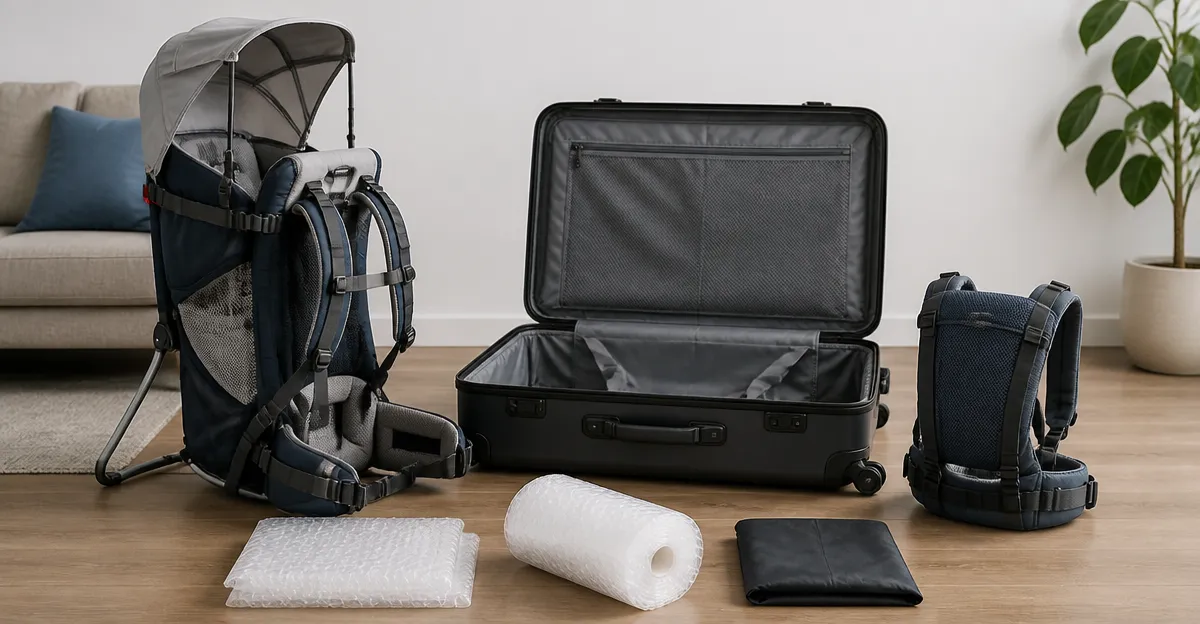
This guide explains how to pack a framed Osprey Poco SLT and a soft carrier safely for airline travel. Readers will learn step‑by‑step methods that protect the carrier, maximize suitcase space, and comply with airline regulations. The information is valuable for families who travel frequently and need a reliable system for transporting their child gear. By following these instructions, one can avoid damage, reduce fees, and enjoy a smoother travel experience.
What You'll Need
- Osprey Poco SLT – $279.95, 4.5/5 rating
- ClevrPlus Backpack Carrier – $119.95, 4.6/5 rating
- Travel‑size packing cubes or compression bags
- Soft laundry bag or padded garment bag
- Reusable zip‑top bags for small accessories
- Measuring tape and a marker for labeling
Step 1: Inspect the Carrier and Verify Airline Policies
Begin by confirming that the carrier’s weight and dimensions comply with the airline’s checked‑baggage limits. The Osprey Poco SLT supports children from 16 to 40 lb and has a total gear capacity of 48.5 lb, making it a substantial item that may approach weight restrictions. Review the airline’s policy on oversized items; many carriers are accepted as standard luggage if they fit within the linear dimensions. Record the carrier’s folded size after step 2 so you can compare it to the airline’s maximum. This verification prevents unexpected fees at the gate.
Step 2: Disassemble and Fold the Frame
The Osprey Poco SLT features a patented folding frame that locks securely for stability. Release the frame locks, then collapse the frame according to the manufacturer’s instructions. The frame folds down to a compact rectangle that can be placed flat inside a suitcase. For a soft carrier such as the ClevrPlus Backpack Carrier – $119.95, 4.6/5 rating – there is no frame, but the seat can be folded forward to reduce bulk. Folding both carriers reduces the overall volume and protects moving parts during transport. Ensure that all latch mechanisms are fully engaged before proceeding.
Step 3: Wrap the Carrier in Protective Padding
Place a clean, lightweight laundry bag over the folded frame to shield it from scratches and moisture. The Osprey frame’s aluminum construction is durable, yet a soft barrier prevents dents caused by hard suitcase corners. For the ClevrPlus, use its included washable drool pad as an inner lining; this adds a layer of cushioning and keeps the carrier clean. If you own a soft carrier such as the Infantino Flip Carrier – $29.15, 4.6/5 rating – wrap it in a garment bag to protect the padded straps and waist belt. The protective layer also simplifies cleaning after the trip.
Step 4: Position the Carrier Inside the Suitcase
Lay the suitcase on a flat surface and place the wrapped Osprey Poco SLT at the bottom, aligning it with the longest interior dimension. This placement creates a stable base and prevents the carrier from shifting during handling. Next, insert the folded ClevrPlus Backpack Carrier alongside the Osprey, ensuring that the two items do not press against each other’s frame joints. If you are also transporting a soft carrier like the MOMTORY 6-in-1 Carrier – $59.99, 4.6/5 rating – position it on top of the other carriers, using a packing cube to keep it compressed. This stacked arrangement maximizes space while maintaining the integrity of each product.
Step 5: Fill Gaps with Packing Cubes and Accessories
Use compression packing cubes to occupy any voids between the carriers and the suitcase walls. Fill the cubes with clothing, toiletries, or lightweight gear; this prevents movement that could stress the carrier frames. Place small items such as diapers, wipes, and baby snacks in zip‑top bags, then tuck them into the side pockets of the ClevrPlus if they remain accessible. The ClevrPlus offers ample storage compartments, which can double as a convenient location for travel essentials. Ensure the suitcase’s zippers close smoothly without forcing; a snug fit indicates that the carriers are securely immobilized.
Tips & Pro Tips
- Label each carrier with a marker and the destination airport to avoid confusion during baggage handling.
- Carry a small repair kit (tape, zip ties, and a spare buckle) in an external pocket for unexpected frame issues.
- When possible, select a suitcase with a hard shell to provide additional protection for the framed carrier.
- Consider using a luggage strap around the entire suitcase to reinforce closure and deter accidental opening.
- For long flights, the Chicco SmartSupport Carrier – $179.99, 4.4/5 rating – offers a built‑in kickstand that makes loading and unloading from the aircraft cargo hold easier.
Troubleshooting
Problem: The suitcase does not close after packing the carriers.
Solution: Remove one packing cube and redistribute its contents around the carrier edges; this often creates enough clearance for the zipper.
Problem: The Osprey frame feels loose after reassembly.
Solution: Verify that all frame locks are fully engaged and that the waist belt is tightened before packing.
Problem: The soft carrier’s straps become tangled with suitcase handles.
Solution: Secure the straps with a zip‑top bag or wrap them around the carrier’s body before placing it in the suitcase.
Conclusion
This guide has demonstrated a systematic approach to packing a framed Osprey Poco SLT and a soft carrier for checked luggage. By inspecting airline policies, folding frames, using protective padding, and optimizing suitcase space, one can travel with confidence and protect valuable gear. The recommended products – Osprey Poco SLT, ClevrPlus Backpack Carrier, Infantino Flip Carrier, MOMTORY 6-in-1 Carrier, and Chicco SmartSupport Carrier – each contribute specific advantages that simplify the process. Implement these steps on the next trip to experience smoother baggage handling and reduced risk of damage.
Frequently Asked Questions
What suitcase dimensions safely accommodate a framed Osprey Poco SLT?
A medium‑large checked bag (around 27‑30 in long, 18‑20 in wide, 12‑14 in deep) fits the frame with padding.
How can I protect the soft carrier from damage in checked luggage?
Wrap it in a padded garment bag or soft laundry bag and secure it with zip‑top bags for extra cushioning.
Do airlines permit a framed carrier as checked baggage?
Yes, most airlines allow it if it meets weight and size limits; always verify the specific carrier’s policy before travel.
Which packing accessories help maximize space when packing the carrier?
Use travel‑size packing cubes or compression bags to compress clothing and reusable zip‑top bags for small accessories.
What’s the best way to label my packed carrier to avoid mishandling?
Attach a clear label with your name, address, and “FRAGILE – KEEP UPRIGHT” using a marker or printed tag.